
Blog

Earlier this month, I had the opportunity to attend the launch of Impetus’ A crisis of disengagement: listening to, and learning from, teachers on school attendance report, hosted by Helen Hayes MP and colleagues from Impetus. As someone who has previously led attendance improvement at local authority level, I found myself reflecting not only on the findings themselves but also on how closely they align with the messages emerging from YEF’s Education Practice Guidance.
The attendance debate is often dominated by statistics, targets and accountability measures. Yet what struck me most from the report launch was that this research was not really about attendance. It was about connection.
Through conversations with classroom teachers, attendance leads and senior leaders, the report paints a picture of children gradually losing their connection to learning, routines, friendships and trusted adults. Attendance becomes the visible indicator, but what sits beneath it is often much more complex.
Having spent several years supporting schools and families to improve attendance across a local authority, much of this resonated with my own experience. Rarely was attendance the presenting issue. Instead, attendance often reflected wider challenges around belonging, mental health, family circumstances and children’s relationships with education itself.
The finding that stopped me in my tracks
Perhaps the most striking aspect of the report was the honesty from classroom teachers.
The report found that many classroom teachers do not view attendance as a top-tier educational priority. While they recognised that attendance matters, many described behaviour, safeguarding, mental health and curriculum delivery as taking precedence in their day-to-day work. Some questioned whether every day in school necessarily matters in the way current attendance messaging suggests. Others expressed frustration about being held responsible for solving attendance challenges that they felt originated beyond the classroom.
As someone who has worked in attendance at local authority level, I found this both refreshing and uncomfortable.
Refreshing because the report captures what many teachers may have been thinking for some time but have perhaps felt unable to say openly. Uncomfortable because it challenges some long-held assumptions within the attendance sector. For many years, attendance strategies have relied heavily on the idea that attendance is everyone’s responsibility. Yet the report exposes a significant disconnect between policy aspirations and the realities of classroom practice.
Teachers spoke candidly about attendance work being perceived as administrative, pastoral and often outside of their core purpose as educators. They described workloads that were already stretched and questioned whether they had the capacity to take on increasing responsibility for attendance interventions.
Whether we agree with these views or not, I believe they are important to acknowledge. Meaningful attendance improvement requires us to understand the perspectives of those expected to deliver it.
Recommendation 1: Looking beyond thresholds
One aspect of the report that particularly resonated with me was Recommendation 1, which calls for a more sophisticated use of attendance data to identify deterioration earlier and recognise improvement more effectively. Rather than focusing solely on persistent and severe absence thresholds, the report argues that we should pay greater attention to changes in attendance patterns before concerns become entrenched.
From my experience leading attendance at local authority level, this feels like an important shift.
Some of the most successful attendance work I observed was not about responding to persistent absence once it had become established. It was about identifying children whose attendance was beginning to slip and intervening before disengagement became embedded. By the time attendance falls significantly, children may already have lost routine, confidence, friendships and a sense of connection to school.
The strong alignment with YEF’s guidance
What also stood out to me was how closely the findings aligned with YEF’s Education Practice Guidance, particularly Recommendation 1: Keep Children in Education. The guidance highlights the protective role that education can play in children’s lives and emphasises evidence-informed approaches to improving attendance, reducing exclusions and supporting children during periods of suspension.
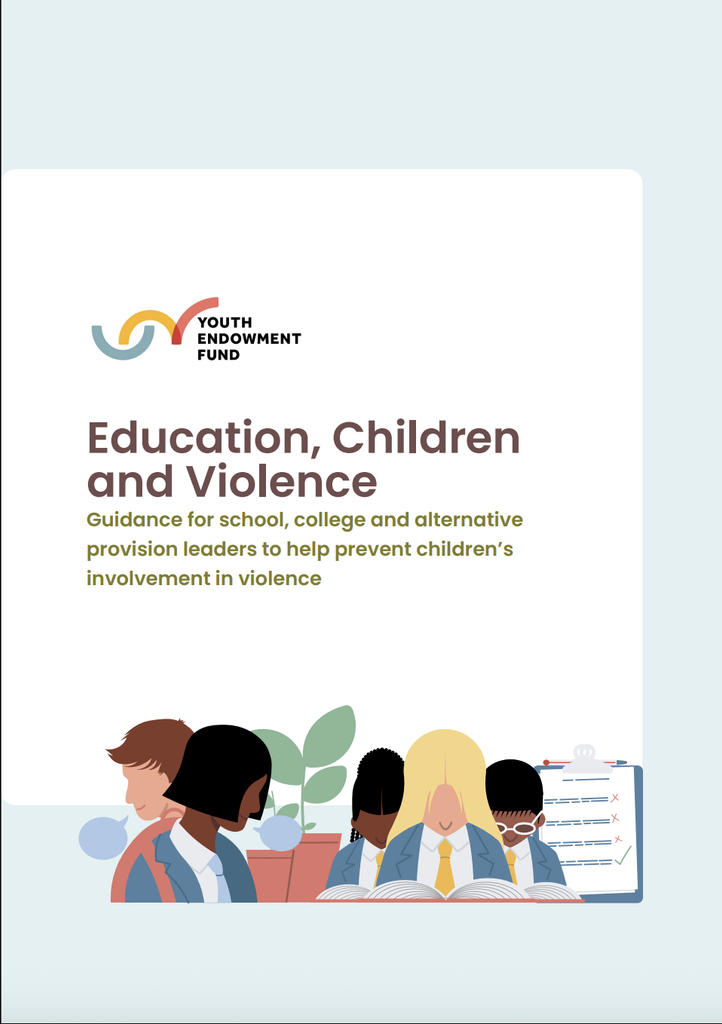
Download the guidance report
Guidance for school, college and alternative
provision leaders to help prevent children’s
involvement in violence
Both reports place significant emphasis on keeping children connected to educational settings. Both recognise the risks associated with children becoming disconnected through persistent absence, suspension or exclusion. And both emphasise the importance of relationships in maintaining that connection.
The power of trusted adults
If there was one theme that emerged consistently throughout both reports, it was the importance of trusted adults.
The attendance report repeatedly found that staff viewed trusted relationships, mentoring and meaningful engagement with families as among the most effective approaches to improving attendance.
Similarly, the YEF guidance identifies trusted adults as one of the strongest protective factors available to children vulnerable to violence and exploitation. Through mentoring, coaching and sustained support, trusted adults can help children navigate challenges and remain connected to positive influences.
In my view, this should encourage us to think differently about attendance, suspensions and exclusions.
While systems, policies and data remain important, relationships are often what determine whether a child stays connected to education. A trusted adult may be the reason a young person returns after a prolonged absence. They may be the person who supports reintegration following suspension. They may be the protective factor that prevents temporary disengagement from becoming permanent disconnection.
Final reflections
Attending the launch of the report left me reflecting on how the attendance conversation continues to evolve. The report challenges us to move beyond viewing attendance as simply a compliance issue and instead understand it as a reflection of engagement, belonging and connection.
What I will take away most, however, is the honesty from classroom teachers. Their reflections highlight the practical realities facing schools and remind us that attendance improvement cannot rest solely on adding more responsibilities to an already stretched workforce.
The challenge for all of us working across attendance, exclusion and violence prevention is to continue building systems that identify concerns early, strengthen trusted relationships and help children remain connected to education.
Because ultimately, improving attendance is not only about getting children through the school gates. It is about ensuring they feel they belong once they are there.