
Blog

Encouraging first steps from latest evaluation reports
Positive activities have the potential to reduce serious youth violence. As the YEF Toolkit explains, sports programmes have a ‘high’ average impact on youth crime and violence. We also know that across England and Wales there are so many organisations, large and small, that are working hard to provide sports, arts, wilderness or adventure activities to young people. 51% of youth sector organisations surveyed in the National Youth Sector Census (2021) reported providing sports and physical activities to young people. There are also over 800 Arts Council National Portfolio Organisations that deliver over 10,000 interventions to young people each year. These organisations aim to develop young people’s self esteem, their social skills, and provide a positive outlet.
However, we still have much to learn. Although there is emerging, promising evidence associated with some of these activities, there are large evidence gaps. For instance, we only have a ‘low’ level of confidence in our Toolkit estimate of high impact for sports interventions. There is a lack of high quality research, and a particular scarcity of studies from an English and Welsh context. This is why we recently launched the Positive Activities funding round. It will fund the delivery and evaluation of positive activity interventions from 2024 and further build the evidence base.
But the work to build this evidence has already begun. Today, YEF have published 11 evaluation reports, building on the 16 that we’ve published so far. These reports evaluate violence reduction interventions, and three of today’s batch provide encouraging emerging findings on positive activities.
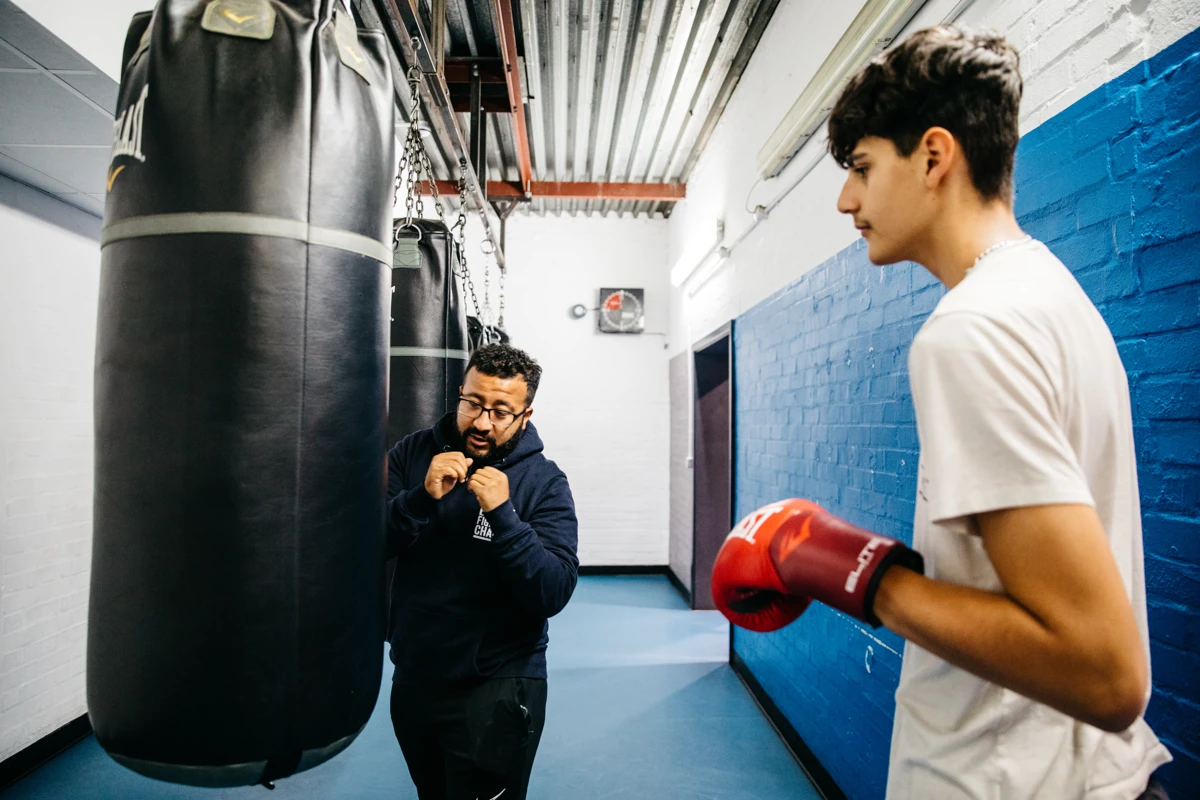
The feasibility and pilot study of Rugby Football League’s Educate Mentoring Programme, an initiative that combines weekly mentoring sessions with sports for young people at risk of serious youth violence, features heartening findings. The evaluation, funded by YEF and delivered by Manchester Metropolitan University, showed the programme to be feasible and delivered as intended. The YEF is now exploring setting up a larger impact evaluation. YEF is also exploring setting up an impact evaluation of Empire Fighting Chance (EFC) following a similarly promising feasibility and pilot study. EFC combine non-contact boxing with mentoring for at risk young people, and Manchester Metropolitan University’s evaluation found their programmes to be feasible, well-attended, and well-perceived by participants. Finally, the University of Birmingham’s feasibility study on United Border’s ‘B.U.S’ intervention has also yielded encouraging findings. The B.U.S initiative offers at-risk 10-17 year olds the opportunity to make music and receive mentoring in a specially adapted bus. The evaluator found the programme to be feasible, with UB surpassing recruitment and delivery targets. A further pilot evaluation of the programme is underway.
There is still much work to do. None of these evaluations were designed to establish whether these interventions reduce serious youth violence. Rather, they explored the programmes’ feasibility and readiness for larger scale impact evaluation. But we can be heartened that the Rugby Football League, Empire Fighting Chance, and United Borders are all delivering feasible interventions, that are well-regarded by participants, and are ready for a larger, more robust test of their impact. We expect these future evaluations to build the evidence base and, eventually, allow us to answer: do positive activities reduce serious youth violence, and if so, how?
Read the evaluation reports:
- Empire Fighting ChanceFeasibility & Pilot study
Empire Fighting Chance
Non-contact boxing and mentoring for at risk young people.
- Rugby Football League: Educate Mentoring ProgrammeFeasibility & Pilot study
Rugby Football League: Educate Mentoring Programme
12 week mentoring programme delivered by the Rugby Football League
- United Borders: B.U.S programmePilot study
United Borders: B.U.S programme
A 10-week music mentoring intervention for 10-17 year olds.
- Blog
Blog:Expanding Parenting Orders: a Youth Advisory Board member on the possible unintended consequences
One of our Youth Advisory Board members reflects on their experiences at school and alternative provisions, providing insight into what lessons could be learnt regarding the plans to expand Parenting Orders. - Blog
Blog:Social and emotional learning: what the latest evidence says about preventing violence
Social and emotional learning (SEL) programmes help children develop skills such as emotional regulation, self-awareness and relationship-building. Increasingly used in schools, alternative provision and youth services, these approaches are often seen as an important part of violence prevention and behaviour improvement strategies. We recently reviewed the latest evidence to understand whether universal and targeted SEL… - Blog
Blog:Attendance, Belonging and Connection: Reflections from the Impetus Attendance Report Launch
Earlier this month, I had the opportunity to attend the launch of Impetus’ A crisis of disengagement: listening to, and learning from, teachers on school attendance report, hosted by Helen Hayes MP and colleagues from Impetus. As someone who has previously led attendance improvement at local authority level, I found myself reflecting not only on…